
VitalQuant seamlessly connects the expertise of Wall Street strategy design professionals with the needs of independent investors. Our team actively engages with top financial engineers to uncover the most effective investment factors that can significantly boost portfolio performance while dramatically decreasing risk. Our "Inside Secrets Blog" documents those insights in language non-experts can understand.

Understanding the difference between simple and compound interest is at the absolute core of successful investing. While they might sound similar, the mathematical outcomes over time are worlds apart.
To understand why compounding is so powerful, we must first define the two ways your money can grow:
Let’s look at what happens to a $10,000 investment at a 7% return over 20 years:
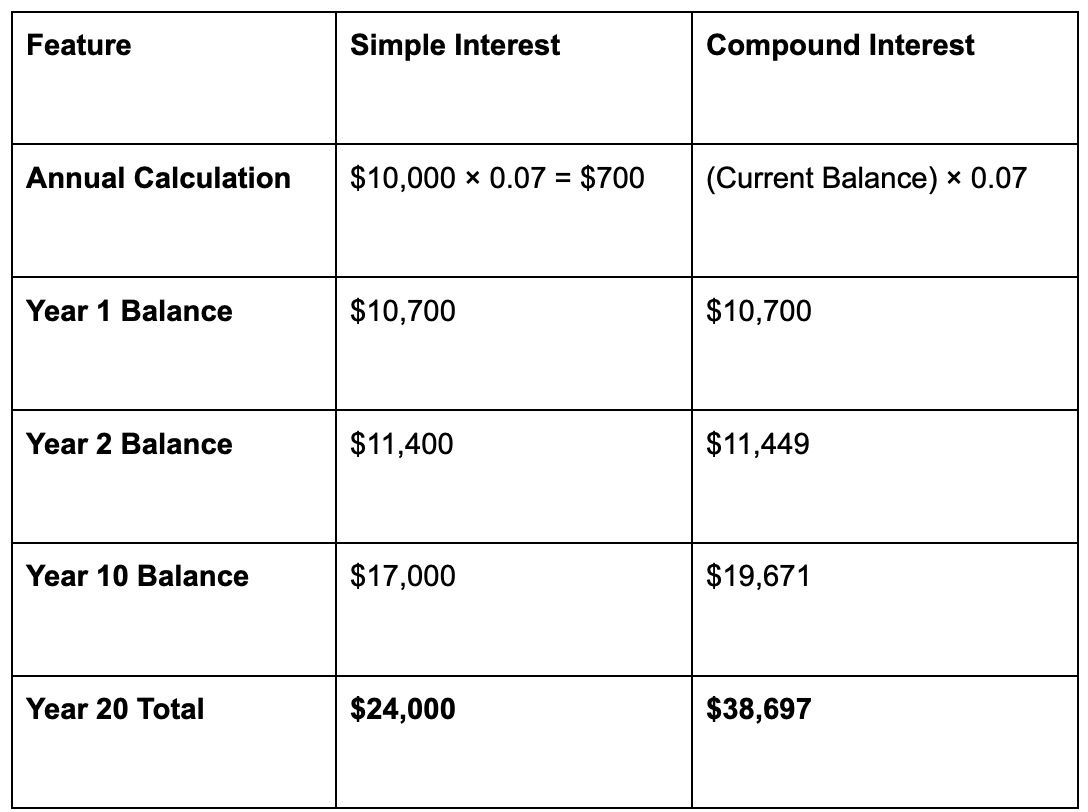
The Verdict: By choosing compounding, you end up with nearly 60% more money over 20 years without doing any extra work.
The secret to compounding is that it shifts your wealth from arithmetic to geometric growth.
In the stock market, your returns accrue geometrically. This is why it is critical to reinvest your dividends. When you reinvest, you increase the base amount upon which you earn interest, accelerating the geometric climb.
Compounding is a function of time. The longer you leave the "snowball" to roll, the more massive it becomes.
The 40-Year Horizon (Age 25 to 65):
If you save $10,000 per year with an average 10% annual return:
By consistently contributing and allowing interest to compound, a total investment of $400k turns into nearly $5 million.
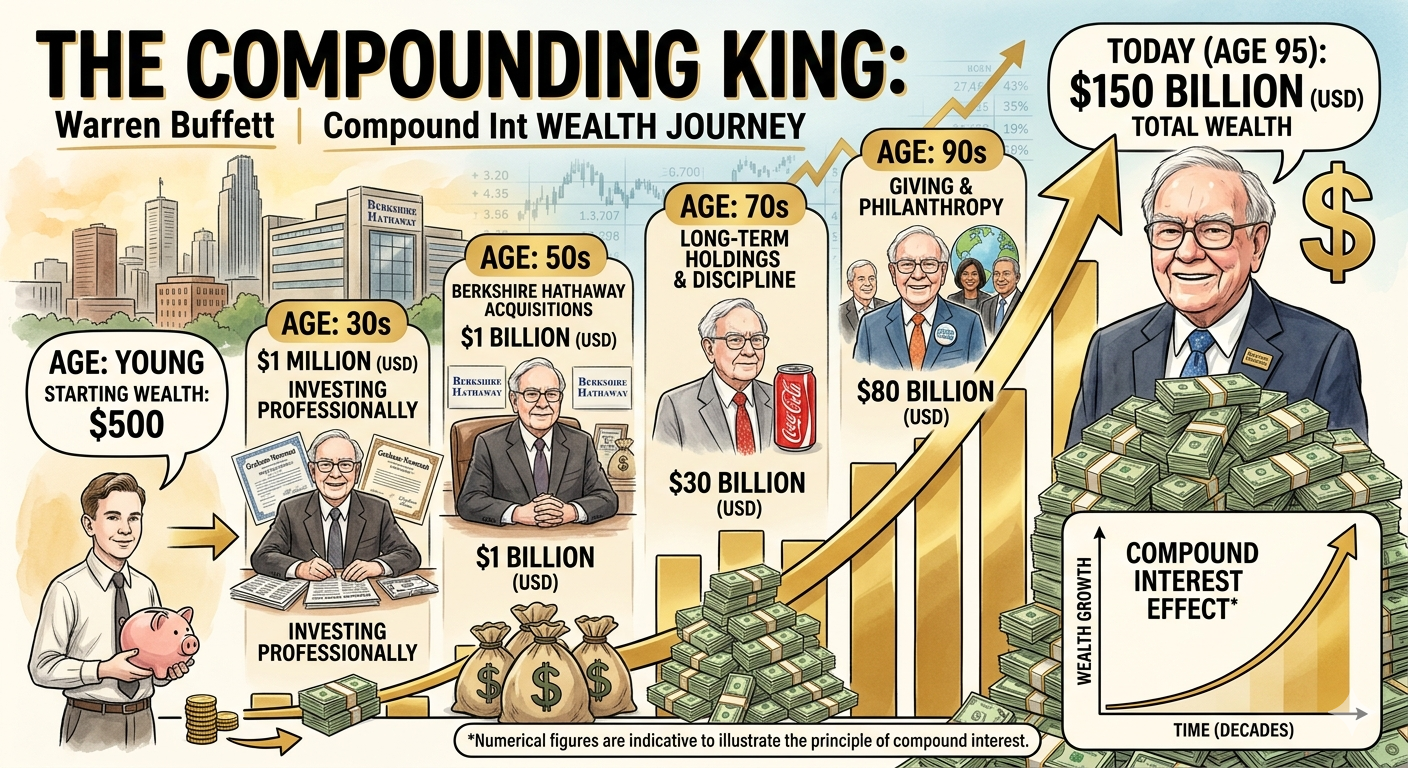
Compound interest is how Warren Buffett transformed a modest start into a global empire. Starting with just a few hundred dollars of his own money in his early 20s, he focused on steady, long-term compounding. Today, decades later, his net worth is measured in the billions. He didn't just work for his money; he let his money work for him through the magic of time and compounding.
At VitalQuant.com, we focus on systematic investment models designed to seek steady, exceptional returns while managing the risks of market recessions.
The math is simple: The earlier you start, the less you have to work.

VitalQuant provides individual investors with institutional-grade investment strategy signals at an affordable price. Profit from Wall Street's best-kept secrets today.
.svg)
.svg)
.svg)
.svg)